.png&w=3840&q=75)
Five hundred hectares.
One ecosystem.
Each Greenprint Hub will be a self-sustaining agro-industrial complex — combining open-field crops, soilless greenhouses, processing factories, tree plantations, and solar power into a single integrated organism.
Four zones.
One self-sustaining whole.
.png&w=3840&q=75)
The greenhouse complex
Climate-controlled hydroponic and aeroponic greenhouses producing tomatoes, peppers, leafy greens and herbs year-round — using ninety per cent less water than traditional cultivation.
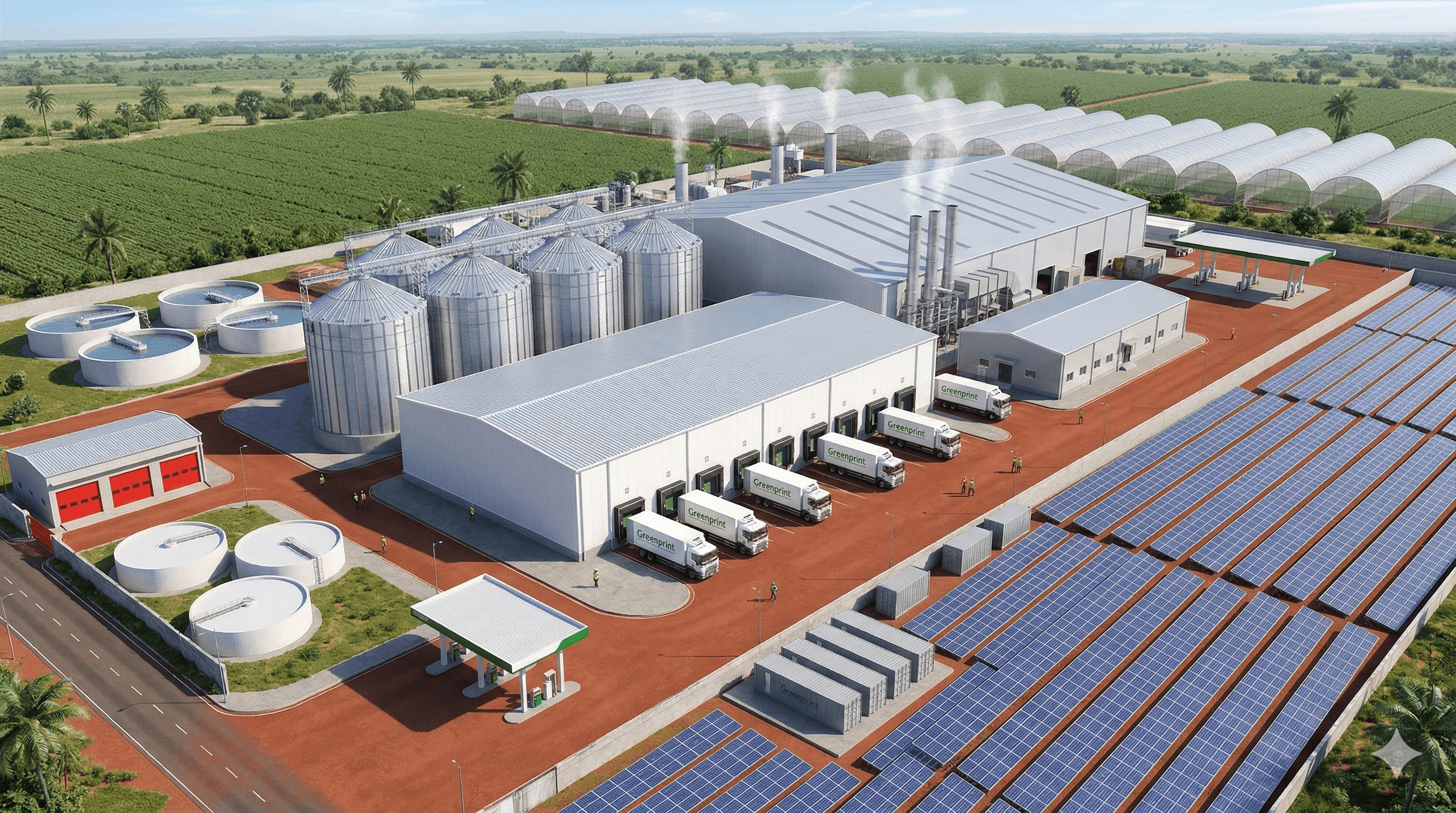
The factory core
On-site processing, packaging, and cold storage. Crops harvested in the morning are processed by midday and ready to ship — eliminating the post-harvest losses that plague African agriculture.
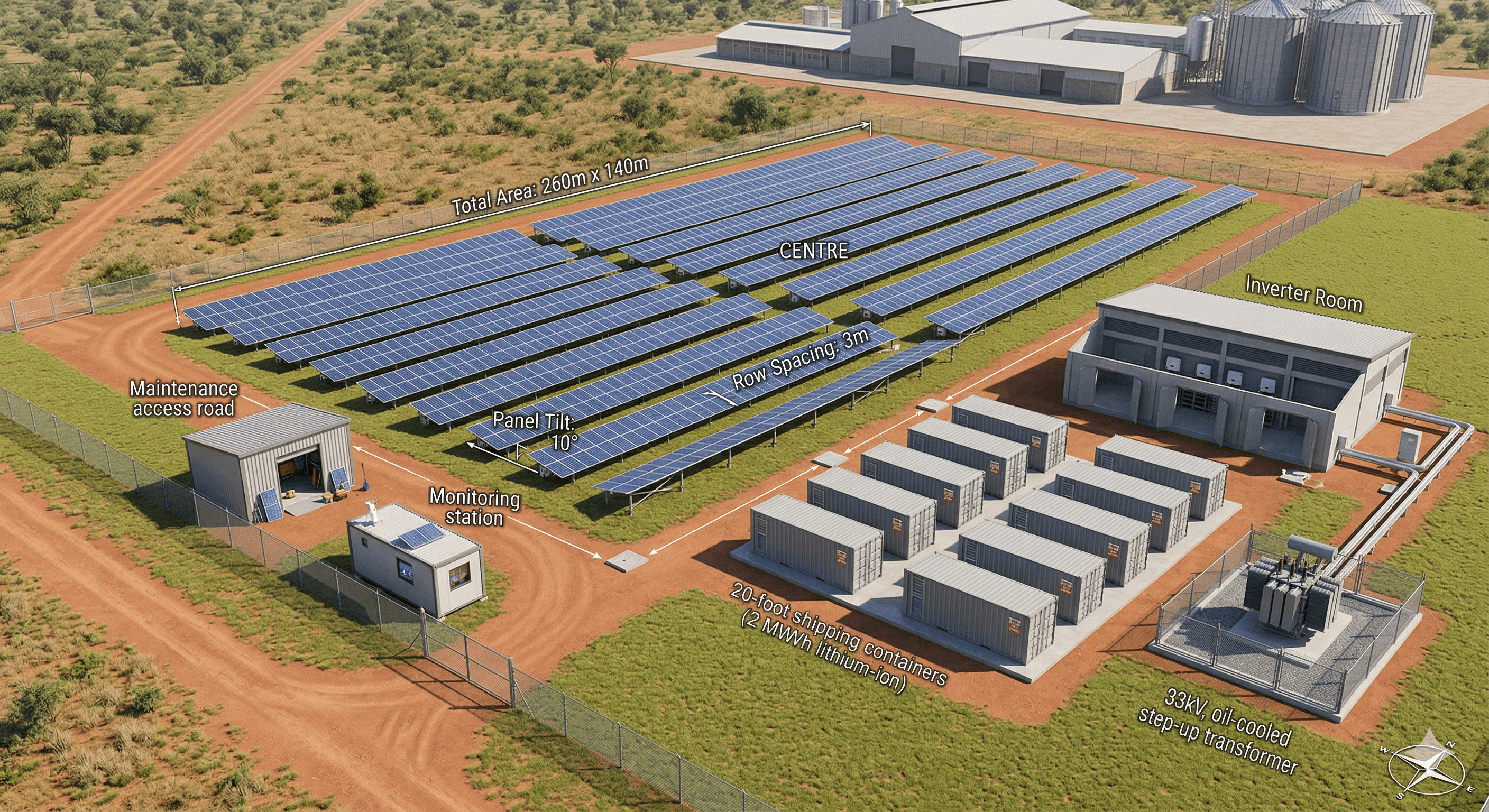
The solar power plant
Each hub will run on Africa's most abundant resource — sunlight. Solar arrays will power greenhouses, factories, and irrigation, with surplus feeding into the national grid.
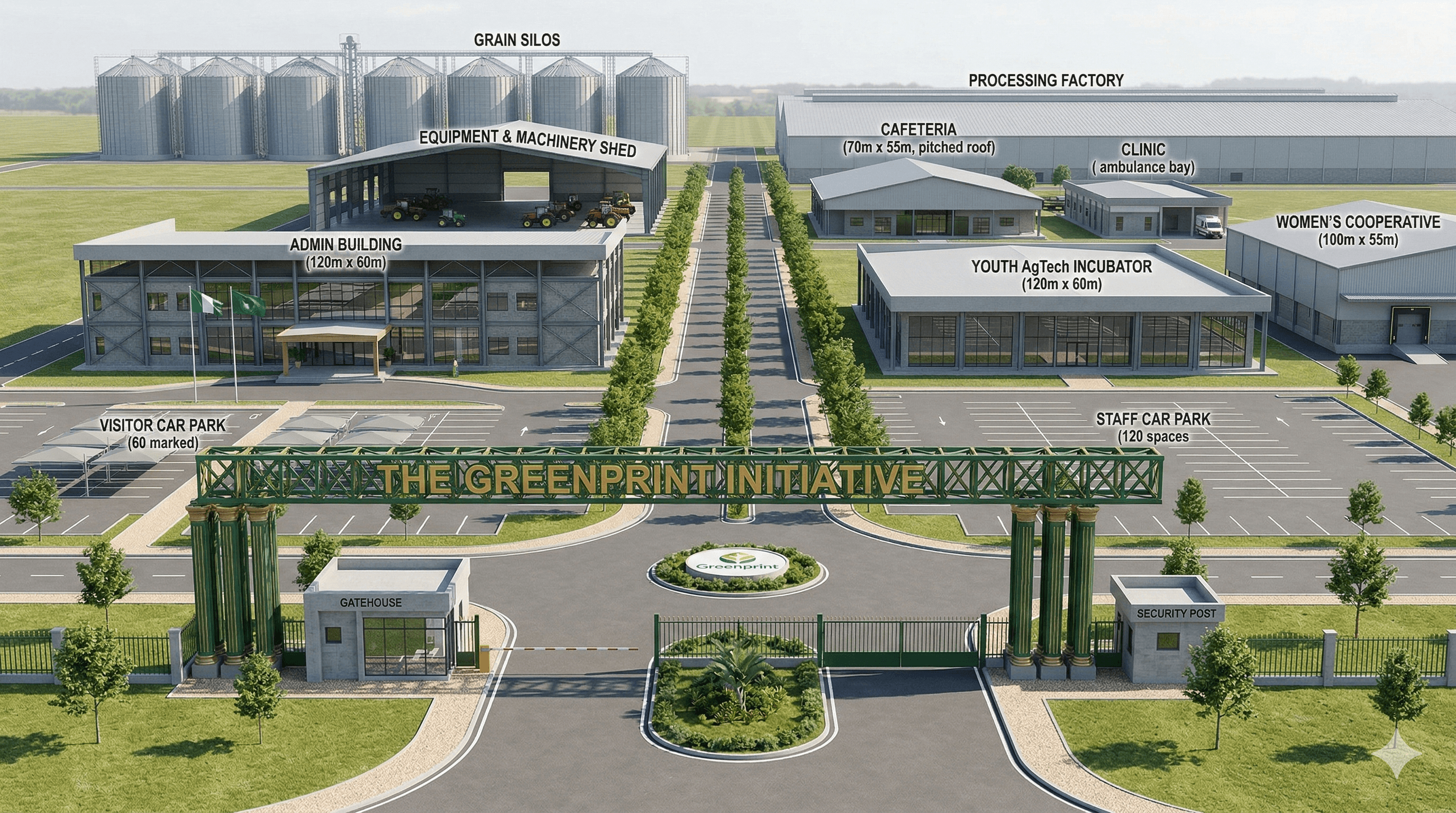
Entrance and admin
Training centres, research labs, agricultural extension offices, and community spaces. Each hub will be a campus as much as a farm — where the next generation of African agriculturalists is formed.
Built for the
twenty-first century farm.
Every hub will integrate field-tested technologies that have transformed agriculture elsewhere — adapted to African climates, soils, and needs.
Smart irrigation
Sensor-driven drip and aeroponic systems delivering exactly the water each plant needs.
Solar-first energy
Photovoltaic arrays providing baseline energy, with battery storage for night operations.
AI agronomy
Machine-learning models optimising planting schedules, detecting disease early, and predicting yields.
Cold-chain logistics
On-site refrigeration and integrated road and rail links moving produce from harvest to market in hours.
Regenerative practices
Cover cropping, agroforestry, and compost cycling — rebuilding soil health while producing food.
Open data platform
Public dashboards tracking yields, jobs, water saved, and trees planted. Accountability built into the model.
From soil to global markets.
Open-field crops, greenhouse vegetables, livestock, and tree plantations grown side-by-side.
Coordinated picking schedules, on-site quality checks, and immediate cold transfer.
On-hub factories handle washing, sorting, drying, milling, and packaging — value added before export.
Cold-chain trucks move finished goods to regional markets, ports, and AfCFTA trade routes.
Profits re-circulate into community training, hub expansion, and the planting of more trees.